“Is anyone among you suffering? Let him pray. Is anyone cheerful? Let him sing psalms.” James 5:13 NKJV
In “The Prayer Book of the Psalms — Part 1,” I shared with you how that reading the Psalms aloud, rather than passively listening, helps me to maintain focus and fosters a disciplined, intimate fellowship with God. I hope that you’ve had an opportunity to try reading out loud and I look forward to hearing if it helps you too to better hear God’s voice and understand His heart.

As I have been daily reading out loud and praying the psalms, I’ve noticed two things:
- Syntax matters
- I read through a New Testament lens
Syntax matters
Before beginning to read, I ask the Lord to speak to my heart and give me a prayer to pray – one that will lead me through the day’s encounter with daily tasks, friends and ministry opportunities.

Syntax, the structure of words in a sentence, matters when we seek to grasp what God is saying in the moment. Syntax is so important to communication that someone has observed, “Syntax is the workhorse of meaning.” It is indeed a key to comprehending whatever is said.[i]
As subjects, verbs, and objects are the building blocks of our English sentencing, they are also the building blocks of God’s message to us. Just as adding parts of speech to the basic building blocks of our message clarifies communication, the Holy Spirit inspired the Psalmist to convey clear messages from God for us to understand and follow in daily life. And so, I read out loud God’s carefully constructed sentences, I find myself instinctively emphasizing the pronunciation of a noun here, a verb there, and the object of both.
What joy to realize that God’s Spirit is causing me to notice specific words and ideas in the Psalm. I ponder, I pray, I say, “Lord show me,” and it dawns on me what God wants me to notice. I am filled with wonder at the relevant connection the message had to the first readers, and now to me.
Syntax matters when we seek to grasp what God is saying in the moment.
And that’s why pronunciation out loud of those key words quickly turns into prayer. The building blocks of God’s communication become the building blocks of my communication back to Him. This is “praying in the will of God.” This is communion with specific meanings that I can relate to my day, not just spiritual awareness that calms me or moves me beyond understanding. That too is an outcome, but usually that outcome is now the afterglow of my communion with God through a forceful, clear message of His words to my heart.
“This is the confidence we have in approaching God: that if we ask anything according to his will, he hears us.” 1 John 5:14 NIV
Praying those wonderful words from the Psalms, first in intimacy with my Savior, but then in intercession for others has opened the door to specific ways that I can serve those that I pray for. The rewards are endless!
The first thing I’ve noticed praying the psalms daily is that syntax matters when we seek to grasp what God is saying in the moment. The second is that I read through a New Testament lens.
A New Testament lens

I have the privilege of reading the Psalms from a perspective that King David and other prophets could only dimly and mysteriously enjoy. Theirs was a vision in shadows while yours and mine is a vision in the bright glory and light of Jesus Christ’s incarnation and ascension.[ii] Simply put, my amazing gift in reading the Psalms is the New Testament and the personal indwelling of the Spirit of God.
Here’s a list of the “New Testament Lenses” through which I pray the Psalms (please note, it is by no means exhaustive):
- God is personal in His sovereignty
- The Trinity is the reason the Psalm’s message touches every part of life so powerfully
- All comfort is of God
- Righteousness belongs to Christ
- My enemies are of the soul
Lens: God is personal in His sovereignty
God is absolutely sovereign and trustworthy. This is clear from the Psalms but personalized in the Lord Jesus Christ and amplified in the consummation of all things as revealed in the New Testament. God is absolutely free to do as he pleases and he will do what he says he will do. But because of the arrival of Jesus Christ on planet earth we can no longer believe that he will do that from afar. Yes, God is transcendent and the God who judges the world, but he is also the God who draws near and seeks to inhabit the very center of our lives as our personal Lord and Savior.
So, when the Psalmist exalts God in his sovereignty and calls the nation to surrender to his will, the call to my heart is to personally surrender to Christ. When the Psalmist calls for holiness in the nation, I call to God for holiness in me.
Lens: The Trinity is the reason the message touches every part of life so powerfully

As Christians schooled in the teaching of the New Testament, we know the Father is revealed to be the source of all life, the one from whom all blessings flow, the one from whom every good gift comes—out of light and glory.[iii] As a friend of mine recently said, “Don’t complain about the breath you don’t have, praise God for the one you do.” Knowing the New Testament, we know the Son of God, Jesus Christ, as the one who redeems and reigns over history—all our affairs.[iv] And knowing the New Testament, we know the Spirit of God is the Presence of God working all things of God together for our good and his glory.[v]
Reading the Psalms, consider the God to whom you unburden your heart. The Trinity was not fully revealed until Jesus came and the New Testament was written. When the Psalms refers to Yahweh, to God, New Testament schooled believers seek to understand how One God in Three Persons might personally involve him in the prayer.[vi]
Psalm 139:1-6, 13-16 — Is the Father’s relationship to us in view?
Psalm 139:7-12,17-18 — Is the Holy Spirit’s relationship to us in view?
Psalm 139:19-24—Is the Son of God’s relationship to us as the Lord over all in view—not only our hearts but also our rejection of anything that would detract from his lordship?
Lens: All comfort is of God

The New Testament identifies God as the God of ALL comfort.[vii] This is not different from the Psalms, but amplified and fully personal in Jesus Christ’s invitation to receive abundant life directly from him through the ministry of the Comforter, the Holy Spirit. When we pray the Psalms, we are not praying to the universe as so many say. We are praying to the person of holy God—the only true source of comfort in our trials. [viii]
Lens: Righteousness belongs to Christ
The Scriptures present the righteous one as the person who is both justified and upright before God and also mercifully just in dealings with others. A righteous work is therefore one that seeks the glory of God and the good of others. The focus on righteousness in the Psalms is life in sweet and sometimes fierce accord with God’s Law. As such, Old Testament “a righteousness life” is one validated from an outward perspective. The New Testament, on the other hand, clarifies that God’s validation of a person as righteous is from an inward perspective.
“It is because of him that you are in Christ Jesus, who has become for us wisdom from God—that is, our righteousness, holiness and redemption. 31 Therefore, as it is written: ‘Let the one who boasts boast in the Lord.’” 1 Corinthians 1:30-31 NIV
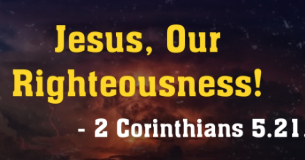
Because of the New Testament, when I read and apply the Psalmist speaking of “my righteousness” to myself, I must say, “my righteousness in Christ.” The New Testament consistently presents righteousness and its manifestation in justice as a gift from God—a clothing with the righteousness of Christ. In ourselves there is no one found righteous before God. Only the one whose heart is cleansed by the blood of Christ and indwelt by the Spirit is set apart to God as “righteous.” And when we, as New Testament believers, speak of God showering favor upon someone because of a righteous heart, we speak of the benefits to a walk in close, personal fellowship with the Holy One himself. [ix]
“Remember me, O Lord, with the favor You have toward Your people. Oh, visit me with Your salvation, That I may see the benefit of Your chosen ones, That I may rejoice in the gladness of Your nation, That I may glory with Your inheritance.” Psalms 106:4-5 NKJV
Lens: My true enemies are of the soul
The Psalms seemed to focus on other people as personal enemies to Israel or its king. Because of the New Testament, we can apply those passages personally by thinking of “enemies” as enemies to our soul and spirit, or to the “soul of the nation” (its prevailing moral consciousness before God).
The New Testament makes it clear how God would have us view enemies.
First, our worst and most persistent enemies are spiritual in nature.
The Apostle Paul goes so far as to say we don’t fight flesh and blood, but spiritual forces of wickedness in high places.[x] He also declares that since Christ has risen and ascended over a worldwide global Church, it is not God-like to arbitrarily divide people into opposing camps by prejudice or jumping to conclusions about motives by observing outward actions. The apostle declares that in the New Creation in Christ we do not identify with each other by the flesh, but by the spirit.[xi]

So, as we read and personalize the Psalms, it is important to first of all see the enemy spoken of as the dark spiritual powers of evil under Satan’s control. Our first concern in praying for God’s deliverance from enemies should always be the fleshly idols and worldly conformity of our own lives that war against the soul.[xii] Those enemies will easily subject us to Satan’s evil influences and work to destroy our love, hope and faith because of Christ.
Secondly, confronted by other people who hurt us or attack us, we may view the hurtful thing as an enemy but we are not allowed to view or condemn the one from whom the hurt comes as an enemy.

We are to forgive and love them, according to the New Testament.[xiii] Yes, in our hurt and honest openness before God in prayer, we may rail against them in anger but at the end of the day that’s not where we leave them. God says that vengeance is his alone. We must leave them with God. He will judge all—righteously, compassionately. [xiv]
“For many walk, of whom I often told you, and now tell you even weeping, that they are enemies of the cross of Christ, 19 whose end is destruction, whose god is their appetite, and whose glory is in their shame, who set their minds on earthly things. 20 For our citizenship is in heaven, from which also we eagerly wait for a Savior, the Lord Jesus Christ; 21 who will transform the body of our humble state into conformity with the body of His glory, by the exertion of the power that He has even to subject all things to Himself.” Philippians 3:18-21 NASB
As I conclude, I pray that you and I will continue to grow in joy and peace of intimacy with God. As you experiment with reading the Psalms out loud, I would welcome your comment on how that practice enhances your focus and understanding of God’s message to your heart.
“May the grace of the Lord Jesus Christ, and the love of God, and the fellowship of the Holy Spirit be with you all.” 2 Corinthians 13:14 NIV
Shalom!
[i] “Seriously, Syntax Matters: Critical Connections to Comprehension”
[ii] John 14:15-17, 25-26; 16:5-15; Romans 8:26-30; 1 Peter 1:10-12; 2 Peter 1:19-21
[iii] Acts 17:24-25; James 1:17
[iv] Colossians 1:15-20; Philippians 2:5-11; Hebrews 1:1-3
[vi] Praying the Psalms by Daniel Bourguet
[viii] Matthew 5:1-12; 11:25-30; 19:29; Mark 8:34-35; John 10:7-11; Romans 15:4-6,13; Revelation 7:13-17; 21:1-8
[ix] Matthew 5:6,20; Mark 12:30-31; Luke 10:25-37; John 16:8; Romans 3:19-27; 8:12-17; 12:1-2; James 1:19-20; 1 Peter 1:13-25
[xi] 2 Corinthians 5(esp. vv. 7,16-17)
[xii] 1 Peter 2:11-12; 1 John 2:15-17
[xiii]Matthew 5:21-26, 38-48; Romans 11:28-32; 12:9-21
“God Judges Righteously” (Psalm 139)—Alistar Begg – “In the closing verses of Psalm 139, David zealously prayed for the destruction of the wicked—then submitted himself to divine scrutiny as well. Like David, Christians should hate evil and long for its eradication, explains Alistair Begg. Vengeance, however, isn’t our responsibility. God alone judges righteously. Only when we understand His holiness and purity will we realize how lost and sinful we truly are, trust Jesus, and be saved by grace from God’s wrath.”
In prayer, marveling at the grace of God in his knowledge of and presence with him, the psalmist is said to “hate” the enemies of God with “perfect hatred”, according to Psalm 139:21-22. This appears to be an alignment with God’s “perfect hatred” (total or complete rejection in devotion to preserving the beauty and purity of undiluted and unpolluted holiness). His “hatred” must ultimately consign those who choose to die in their sins to eternal destruction, separated from his life-giving, holy presence (2 Thessalonians 1:9), but is not devoid of sorrow or grief in doing so. God in fact longs with all His heart for those lost to be reconciled to Himself with deepest tears of grief, and not without the greatest sacrifice of Himself He could make in order to give the gift of salvaiton (Isaiah 30:15-18; John 3:16-21; Luke 19:41-44; Philippians 3:17-21 [esp. v.18]; 2 Peter 3:1-18 [esp. v.9])
Do not say, “I will repay evil”;
wait for the Lord, and he will deliver you. (Proverbs 20:22)
“Repay no one evil for evil, but give thought to do what is honorable in the sight of all…Beloved, never avenge yourselves, but leave it to the wrath of God, for it is written, “Vengeance is mine…” Romans 12:17-19 ESV; “Vengeance is mine, and recompense, for the time when their foot shall slip; for the day of their calamity is at hand…” Deuteronomy 32:35 ESV; “For we know him who said, “Vengeance is mine; I will repay.” And again, “The Lord will judge…”; Hebrews 10:30 ESV ; “You shall not take vengeance or bear a grudge against the sons of your own people, but you shall love you…” Leviticus 19:18 ESV; “But I say to you, Do not resist the one who is evil. But if anyone slaps you on the right cheek, turn to him the other…” Matthew 5:39 ESV; “See that no one repays anyone evil for evil, but always seek to do good to one another and to everyone…” 1 Thessalonians 5:15 ESV
“WOE”
AI Summary [please note that it’s not just a prophetic warning, but an expression of grief calling for repentance]:
In the Bible, the Hebrew term for “woe” is often translated from the word “הוֹי” (hoy). It signifies a strong expiression of grief, lamentation, or warning, typically directed towards impending judgment or disaster. Contextual Use — (1) Prophetic Warnings: “Woe” is frequently used by prophets to announce divine judgment against sin or wrongdoing (e.g., Isaiah, Jeremiah). (2) Expressions of Grief: It conveys deep sorrow or mourning, often in the context of loss or calamity. (3) Call to Repentance: In some instances, it serves as a call for people to repent and turn back to God. Examples in Scripture — Isaiah 5:8: “Woe to those who add house to house and join field to field.” Matthew 23:13: Jesus uses “woe” to address the Pharisees, highlighting their hypocrisy. The term encapsulates both a warning and an emotional response to sin and its consequences, reflecting the seriousness of the message being conveyed.
 breathingbygraceblog
[…] “The Prayer Book of the Psalms — Part 2“ I would like to share with you two things that I have noticed while reading the Psalms out loud. […]
LikeLike