
What if forgiveness is more than words we say? What if it is more than about resolving momentary conflict? And, what if forgiveness IS for the other person as much as for ourselves?
Christians are called to forgive as Christ forgave and when did He ever forgive for His own sake alone? (Ephesians 1:7-8, Colossians 3:12-13, Hebrews 9:15, 1 Peter 3:18)
It’s true forgiveness doesn’t necessarily erase the hurt caused and it is true that forgiveness helps us individually to move on. But that doesn’t mean there isn’t something bigger going on, and from God’s perspective, a bigger blessing to be gained that we might experience together.
The fellowship of the Holy Spirit suffers collateral damage whenever someone there carries bitterness or lingering resentments. It can sideline that person from service. The division between two can easily morph into division between many. The backbiting and critical spirit created in the spiritual atmosphere of a group with even only one unforgiving heart can poison the whole (Hebrews 12:12-15, Philippians 2:1-5, 4:2-3).
For the cause of Christ, as well as ourselves, we must forgive each other. It’s a fundamental principle of Kingdom living that creates that perfect peace we all want (Isaiah 26:3). When our minds are fixed on God’s mercy and love, the Body of Christ not only has peace, but really good peace—perfect peace (“shalom, shalom”).
This is why we say, “forgiving is peacemaking.”
When forgiveness is seen as the driving force behind peacemaking the results are much larger than ourselves, or the moment. Forgiveness is at the core of the peacemaking ministry of the Prince of Peace. It is precisely for the possibility and reality of restored and workable relationships in the Kingdom of Christ that we are called upon to forgive as He forgives.
When we forgive others, we “make” peace, helping others to…
- Experience peace with God through Christ.
- Be patient, forgiving and accepting of themselves.
- Feel relaxed and safe.
- Become quiet and calm inside.
- Be compassionate, understanding and forgiving toward those with whom they disagree.
- Be patient, courageous and patient in seeking a workable solution to conflict that promotes moving forward together.
Peacemaking is how we seek to resolve our differences and restore healthy relationships with God and one another.
God is the “God of Peace” of Genesis 6:24. Jesus Christ is the Prince of Peace of Isaiah 9:6.
Jesus Christ, who is “Immanuel” (God with us), is our supreme example of forgiveness in “peacemaking.” He made a way through his death and resurrection for EVERYONE to find peace with God and have the spiritual power to seek peace with others. When we make peace (through longsuffering mercy and forgiveness), we serve God’s purpose to rescue and reconcile the world to himself from our sinful ways—ourselves included! (2 Corinthians 5:11-21) Working to establish the peace that God wants is not just stopping a conflict, so our own minds are at peace but so that ultimately the stage is set for renewed fellowship and cooperation in the life of the Christ’s Kingdom. (Matthew 18:15-35, Colossians 3:5-17)

Blessed are the peacemakers, for they will be called children of God.
Matthew 5:9
Because God loves us, peace is what he wants for us and works through us.

To think of peacemaking as sharing the peace and love in God’s heart empowers us to persevere and work hard to achieve the most we can toward that end (1 Corinthians 13:4-7, Romans 12:9-21). When we are motivated by God’s love for us to love our neighbor and even our enemies, God-like peacemaking will result. When that happens, we can rightfully be called children of the Heavenly Father (Matthew 5:43-48).
The Lord is compassionate and gracious, slow to anger and abounding in lovingkindness. He will not always strive with us, nor will He keep His anger forever. He has not dealt with us according to our sins, nor rewarded us according to our iniquities.
Psalm 103:8-10 NAS95
It is a huge blessing to be known as a Christian who is an example of Jesus to others, particularly in a conflict. Because we are those who care about the hearts of others, we are willing to courageously step forward and work for the peace that God loves to create. It is then that others may think of us as children of God! (John 13:34-35)
HEALING FORGIVENESS IS POSSIBLE!

What does it feel like to be drummed out of leadership you feel called to by God Himself? How much public disgrace can a young husband and father bear and yet go on hoping to re-establish his family’s life somewhere else? Is forgiveness possible when it’s a friend who has betrayed you by manipulation and deceit?
Believe me, forgiveness that’s real IS possible, but when the hurt is deep, it usually doesn’t happen overnight.
Marysville, Washington held so many promises for us that year. Our one-and-a-half-year-old daughter had the delight of growing up in a home across from a playground. We had the adventure of making do in a home with a water heater dating back to colonial designs!
My job was offering pastoral care to youth. I had worked in industry for a few years after college, and then moved to Washington hoping to follow a dream of serving the Lord in youth ministry on an island off the coast of Venezuela. It all seemed to fit when a family friend offered to put me on staff as a youth pastor of his growing church. I guess I should have been suspicious of coming troubles when on the very day of moving in, he showed up at the door of our new home with another church leader to give me a free haircut.
That haircut began one of the most difficult times of our lives. We were not a good fit for that pastor’s vision of church life and so began to feel much resistance to our ministry plans and criticism of our walk with God. It all came to a head before one Sunday evening service when the Senior Pastor called me to an unscheduled meeting with him and the Church Board. There I was questioned and chastised and belittled from all sides.
In the evening service that followed, the pastor’s assistant was given the assignment of announcing the Church Board’s adoption of new, even stricter controls on church ministries. He publicly listed my “sins” as the reason for the changes. That made it impossible to stay on staff and so I was left deeply humiliated and hurt. It was a crushing evening that sent my spiritual life into a deep, downward tailspin and kept our family from being involved with church life for several months. And, if it weren’t for God’s grace, we might still be in that bitter moment of anger and despair.

My little daughter Jennifer had taught me something during those months that began to shape the healing that happened after leaving the church. It was not unusual for her, seeing me deeply troubled by this or that, to pull me down on my knees beside her by the front window with the words, “Daddy, let’s pray.”
And so, now in deep hurt, we humbled our heart-felt desire to him as he had hurt us and began to pray words of forgiveness as best we could. We prayed that this senior pastor and family friend who had wounded us so deeply would be filled with God’s Spirit and come to see the hurt he had provoked with an uncaring, domineering, and selfish attitude.
We imagined forgiveness to be possible because we knew God could do the impossible.

The years went by. With the help of godly friends, we healed and moved back to the Midwest where I enrolled in seminary with the hope of once again picking up a ministry role with children. And then, a call came.
Sitting around the table, playing games late into the evening with my wife’s parents, the phone rang. Julia answered it. With a look of apprehension, she handed the phone to me saying, “You’ll never believe who this is.” It was the pastor from Washington that had hurt us so badly. I heard these incredible words: “I’m calling to ask your forgiveness. Since you left four years ago, the Holy Spirit has not let me rest, and I know now that I hurt you very deeply. I was selfish, full of pride, and could not see the good that you were bringing to us in ministry. Will you forgive me?”
Stunned, I said yes, and told him that Julia and I had been able to move on with God’s help.
Returning to the table to tell my family of the call, I began with the words, “Don’t ever tell me miracles don’t happen!”
Perhaps you too have been hurt deeply, so deeply that you couldn’t imagine for a time that true, healing forgiveness was possible. But it is, and the first miracle to happen is the one that will create the possibility in your heart. Let it take shape in prayer to the One who has done this impossible thing Himself countless times. Trust Him with your hurt. Lean on His understanding and infinite ability to bring good out of a disaster. I know our Heavenly Father has something incredibly good in store for you as you trust Him to carry you through this difficult time.
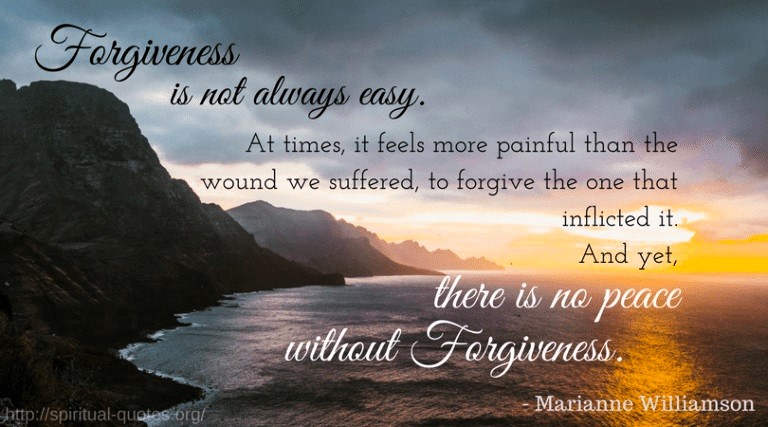
To follow the Holy Spirit in forgiving, choose compassionate mercy and waiting in faith, before doing or saying anything.
First, make choices that help to complete the work of forgiveness in your own heart.
- Choose to love — as God loves (Romans 5:13, 1 Corinthians 13:1-8).
- “Count the cost for Christ,” yielding our hurts and rights to Christ.
- Choose the “Way of the Cross” with Christ.
And Jesus said, “Father, forgive them, for they know not what they do.” Luke 23:34

Second, take steps to bring the work of forgiveness to completion with others.
- Be patient as God’s Spirit works to bring all parties to repentance. (John 16:7-15) [1]
- When the time is right, grant forgiveness in sincere words and meaningful actions.
- Over time, work to rebuild trust by starting in the small things.
- Restore fellowship and enjoy it!

[1] What does the Bible say about repentance?
Additional Resources
- Amazing Love (You Are My King) – Hillsong
- Amazing Love – Guy Penrod
- On Forgiveness – C.S. Lewis
- I Stand Amazed – Gaither Tent Revival


[…] Forgiving Is Peacemaking | February 9, 2024 | In “Forgiveness” […]
LikeLike