Reading Genesis 26 this morning, I was amazed to see a picture of my own life in the life of Isaac — both in how life has physically played out and also what spiritual dynamics have played in the background.
The patriarch Isaac is generally considered one of the weakest of the patriarchs of Israel. Certainly, his father Abraham overshadowed Isaac in his role as our father of faith. Yet without Isaac, the family line that the Son of God used to enter our world would have disappeared (Genesis 26:23-25).

Isaac was a gentle soul.
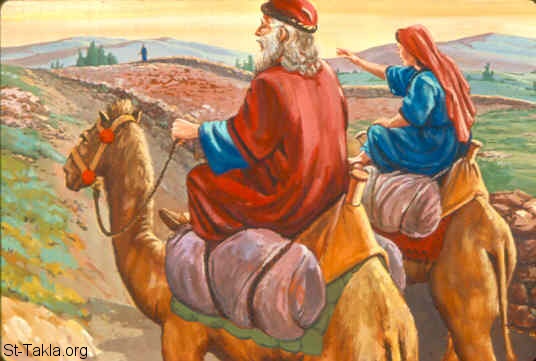
Isaac was not one to raise an army against his enemies, but one to simply pack up and move on. He was a man who quietly went about his business and took the long view on the events of his life. And just so, God used Isaac to keep the family line going from which Jesus came, and more than that, to bring greater focus and clarity to how that would actually happen.
Isaac was a romantic.
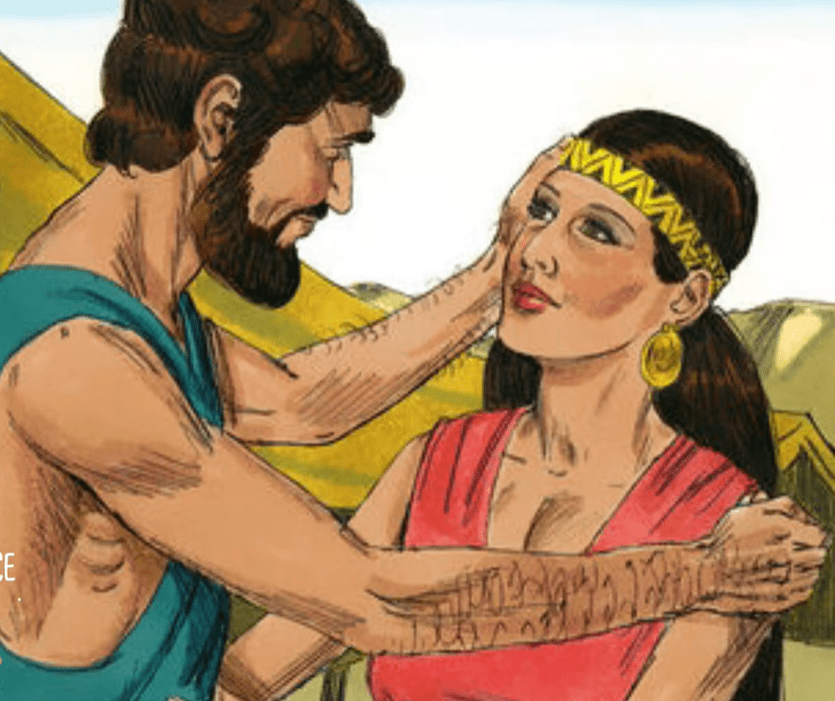
Other than his son Jacob, who is said to have loved Rachel, Isaac is the only other patriarch who is said to have loved his wife, and who was caught “caressing” her by a neighbor. Rebekah was obviously a woman who matched him perfectly. She had a lively mind and character, and an energetic personality (Genesis 24). I have no doubt, that if it had not been for Isaac’s love for her, or more importantly, the fact that God didn’t think it was important to the larger story being told, we might have heard of conflict between the two of them before the Jacob and Esau debacle of chapter 27. Different in personality, I see Isaac and Rebekah as a vital link in God’s plan to bring redemption to our world.
Isaac is also a picture of Christ-like forgiveness toward the worldlings around him.
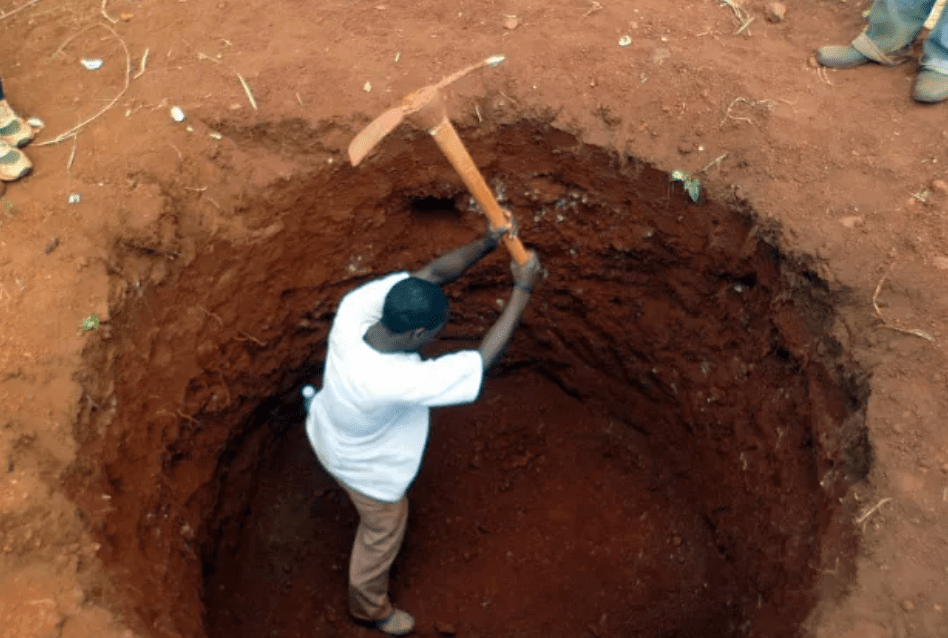
When Abimelech’s servants kept stealing wells from Isaac’s servants, Isaac simply packed up his family and moved on until he had found a place where he could live in peace. There he dug yet another well call Beersheba.[1]

In that place of peace, God blessed him and gave him great wealth. Abimelech sought Isaac’s blessing at that point, recognizing that God was with him. And the amazing thing at that point is also this: Isaac did not throw in Abimelech’s face the fact that he had stolen wells from him. Isaac never brought up the thievery when Abimelech claimed to have never injured him, but simply accepted the offer of peace from Abimelech and continued to live on in great blessing from God. So, Isaac might have become belligerent and addressed the wrongs, but left that behind to move on in greater blessing. It was after that moment of peacemaking with his neighbors when God gave his previously barren wife, Rebekah, the child Jacob from whom Israel would be formed.
Isaac is also one that I can relate to personally.
I’ve had to struggle against the tendency to withdraw from conflict and with feelings of shame over being weak in the face of criticism and the weight of responsibility for leadership. Others have sometimes said that I was gentle in my teaching when I thought I was being forceful! A pastor giving oversight to the Northwest district of the church association in which I served as a pastor once told me that he felt my greatest weakness was lack of boldness. In fact, he questioned whether I had the confidence to ever lead well. This morning I’m encouraged that as Isaac was used of God through his innate gentleness and withdrawing nature, that God can use me also.
And the Lord also gave me a beautiful woman to love, just as he gave Rebekah to Isaac.

Julia was my Rebekah. She and I had distinctly different personalities. Because of those opposite traits we experienced conflict in our marriage, but because of the forgiveness and strength of faith that God put in our hearts toward one another, those conflicts did not destroy us but made us better together. In fact, if we had both been of a gentle, withdrawing nature, I would not have been able to lead the church over the years.
The Lord used Julia in my life to help me become a leader in spite of my innate desire for the comfort of remaining hidden and on the sidelines. Because we learned to live in the grace of forgiveness and to share in the struggles of life at the deepest level, God blessed our union and helped us to bring the light of the Gospel into the lives of many of his children. He also blessed are union with uncommonly beautiful relationships with our neighbors. Looking back, we too learned to surrender our rights to the Lord and give over to Him our claim to property or situations of advantage. We learned to live by God’s gifts alone, not what we could take or make on our own. That was Isaac and Rebekah’s story.
Paul Overstreet’s thoughtful song, “Dig Another Well,”[2] reflects the heart or spiritual realities of Isaac and Rebekah’s story and those in Julia’s and my life as well.

The thing that’s so striking in Overstreet’s work is that it points to the spiritual struggle with spiritual darkness behind Isaac’s scraps with Abimelech in the physical realm. Here are the lyrics of Overstreet’s song, on his album, Living by the Book (Links below):
Well Ike had a blessing from the Lord up above / He gave him a beautiful woman to love / A place to live and some land to farm / Two good legs and two good arms
Well the devil came sneaking around one night / Decided he would do a little evil to Ike / Figured he would hit old Ike where it hurts / So he filled up all of Ike’s wells with dirt
And when Ike went out for his morning drink / He got a dipper full of dirt and his heart did sink / But he knew it was the devil so he said with a grin / God blessed me once and he can do it again / He blessed me once and he can do it again
(Refrain) When the rains don’t fall and the crops all fail / And the cows ain’t puttin’ any milk in the pail / Don’t sit around waitin’ for a check in the mail / Just pick up the shovel and dig another well / Pick up the shovel and dig another well
Now me and old Ike got a lot in common / The Lord blessed me with a beautiful woman / He gave me a job he gave me a home / He gave me a well to call my own
Now when I go out for my morning drink / And get a dipper full of dirt my heart does sink / But I think of old Ike and I have to grin / Cause God blessed me once and he can do it again / He blessed me once and he can do it again (Refrain)
One of the great struggles for those of us who distrust ourselves to not handle conflict well is to become discouraged and feel sorry for ourselves. I’ve been tempted to complain to God that He made a mistake in how He put me together, and groaned under the weight of opportunity and responsibility He’s laid before me. But like Ike, I too have learned that when my morning drink is full of dirt there’s another choice. I can grin and say,
“God blessed me once and he can do it again. Let’s dig another well!”
[1] Beersheba is where Hagar meets the Angel of YHWH there for the second time (Genesis 21:14 — the first time is at Beer-lahai-roi; Genesis 16:14). Beersheba is also the location where God meets Isaac (Genesis 26:24), Jacob (Genesis 46:2, in the verse prior occurs the form בארה שבע, Beerasheba), and Elijah the Tishbite (1 Kings 19:7). A famous native of Beersheba is Zibiah, the mother of king Joash of Judah (2 Kings 12:1). “Beersheba was a well dug by Abraham, and so named because he and Abimelech here entered into a compact ( Genesis 21:31 ). …From Dan to Beersheba, a distance of about 144 miles ( Judges 20:1 ; 1 Chronicles 21:2 ; 2 Sam 24:2 ), became the usual way of designating the whole Promised Land, and passed into a proverb. …It is nearly midway between the southern end of the Dead Sea and the Mediterranean.” [Easton’s Bible Dictionary – Beersheba]
Beersheba means “well of the oath,” or “well of seven.” The Hebrew for seven is shibah (Gen. 26:33) and symbolizes completeness and divine order.
[2] DIG ANOTHER WELL, by Paul Overstreet: Spotify, https://open.spotify.com/track/1xl0Pue5crrw2mKoe2FMJm?si=bfWpgqP-ReSHRLTo_G0qfQ; or YouTube, https://www.youtube.com/watch?v=_gFVi-lWhJ4
Related
4.5 Spiritual Hearing Aids for Everyday Living, Part Two (forgiveness) | September 1, 2021 | In “Forgiveness”
Why the forever pardoned seek daily forgiveness | February 24, 2018 | In “Forgiveness”
Forgiving Is Peacemaking | February 9, 2024 | In “Forgiveness”
 breathingbygraceblog