The beginning statement of Jesus in the Sermon on the Mount is the starting point for all the good things Jesus gives to his servants. This truth is verse 3 of what we call The Beatitudes in Matthew 5:1-12
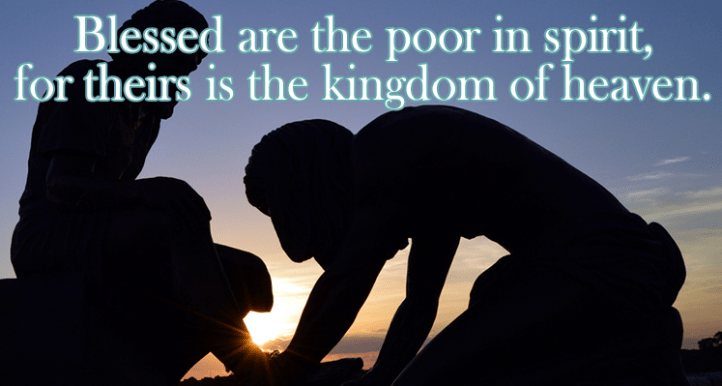
Imagine calling the Kingdom of Christ your home — and beginning to enjoy its riches! What would you give up for that to be made real in your life? The Lord Jesus wants to fill our hearts with his Kingdom, but not if the things of this world or our own self-concerns are kept ahead of him in our hearts. So, let’s follow him in becoming poor in spirit that he might bless us with his kingdom!
Seek the Kingdom of God above all else, and he will give you everything you need. So don’t be afraid, little flock. For it gives your Father great happiness to give you the Kingdom.
Luke 12:31-32 NLT
Mom’s Sunday Dinner
In Wolf Point, Montana, where I was born, we lived right next to the Fort Peck Reservation, home to two distinct American Indian Nations (Assiniboine & Sioux). My dad at the time was in his first pastorate in the Mennonite Church, but he also spent time on the reservation. By doing this, he encouraged our church family to put down long-held prejudices against the Indians, but his visits also caused our home to be visited often by our Indian neighbors. They knew they would find love at our door.
Sunday dinner in the early 50’s was a big deal.

It was the one time during the week when everyone could be there and for many families that included aunts and uncles and cousins as well.
To this day, if you say “Sunday dinner” I’m instantly back in a warm kitchen helping set the table, everyone is in their Sunday best, and we can’t wait for dad to get back from the church so we can get started on what was the best meal of the week. For a poorer family like ours, that could be a very simple fare. Years later I understood why Mom added cream, butter and salt to everything. It was her way of making the humblest of dishes taste as good as she could.
On the Sunday in question, Mom had been saving a large pot roast as a special treat for our Sunday dinner. What she didn’t expect was that an Indian couple would appear at our door on Saturday evening, wondering if we had any food we could spare.
Knowing what it meant, Mom took out the roast, cut off a small portion for our family and sent the rest home with our Indian friend.
Looking at that small bit of meat for Sunday dinner, Mom cried. She had wanted so much to give us a meal that we had not been able to have for a long time. Mom knew that when Sunday dinner rolled around, she’d make up an excuse to not take any of that bit of meat. As she went to bed that night, she prayed that God would give her strength to do the best she could for her family. What she didn’t know at that point was that she had already done that — the best she could for her family.
Sunday dinner came and went, and mom felt disappointed and discouraged the whole day. Finally, the day was over, and she could go to bed. As she and my dad prayed that evening together, they asked God to provide for the family what they couldn’t.
The next morning, He did. The next Sunday dinner was all joy!
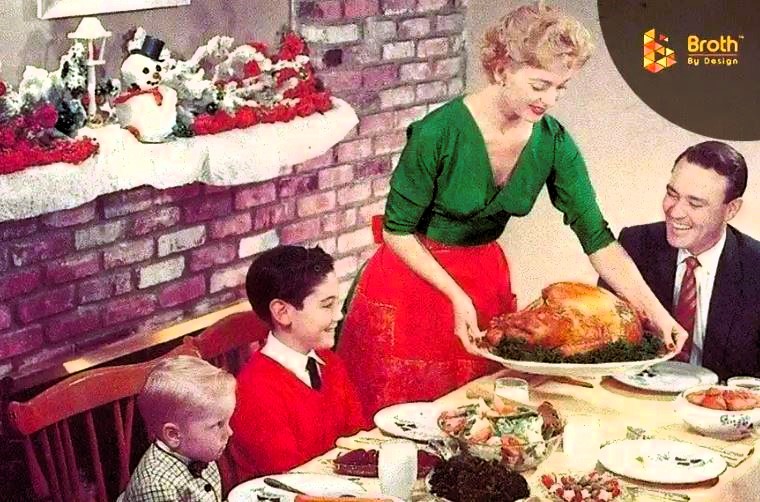
When mom opened the kitchen door, she discovered a quarter-side of beef, a couple of dressed chickens, and two bushel-baskets full of other food waiting for her. She never knew who left it there and told me she always wondered if it had been an angel. It was like she received a hundredfold blessing from the Lord in answer to her humble, loving sacrifice of meat.
I believe my mother’s experience on that weekend illustrates Matthew 5:3 very well. And if my mom could receive this blessing from Jesus, anyone can – if they’re also as willing to be pour in spirit.
The Table Setting of Jesus’ Kingdom Feast
I like to think of the Beatitudes as a Kingdom Feast, and each one is served to us by Jesus Himself. In several places, Jesus uses this word picture to describe the Kingdom of Heaven. [1]
There are a few things that we need to see about the setting of this verse to understand and take hold of what God has for us in it.
First, the blessing is for Jesus and his disciples.
This verse is part of a sermon that Jesus gave to his disciples gathered around him on a mountain side north of Capernaum where his earthly ministry was centered. Though the whole world is invited to this feast, everyone doesn’t sit down to enjoy the dinner. “For many are called, but few are chosen.” Matthew 22:2-14
Second, the blessing is from Jesus alone. Without Jesus, there is NO blessing for you or me today.

Take Jesus out of the picture and there is no blessing for those poor in spirit, or those who mourn, or those who are voluntarily humble and gentle, or those whose soul burns within them for a spiritual life that satisfies.
Take Jesus out of the picture and there is no blessing for those who strive to live right, those who work hard to find peace for themselves and their world, or those who are beaten up by the world for believing in God.
Third, the blessing in verse 3 is the first of eight that Jesus gives. (See Additional Resources below.)
- It is foundational to all the rest. Without poverty of spirit, we cannot move on to the blessings that come in walking with Jesus — in any of these other experiences of life.
- Furthermore, all of them work together to describe the life of a follower of Jesus throughout a lifetime of experience.
Who can come to the Kingdom Feast given by Jesus?
The “poor”…
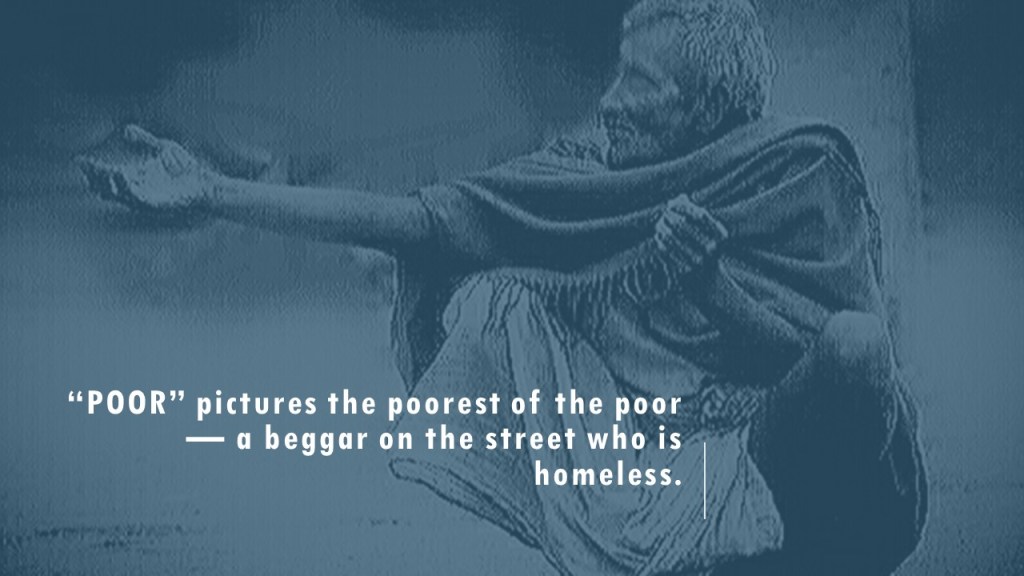
Jesus uses a word for poverty in Matthew 5:3 that pictures the poorest of the poor. It describes a beggar on the street who is homeless. I have never been that poor although I have been close to those who approach it.
QUESTION: Are disciples among the poorest of the poor blessed with the Kingdom? Yes, but get this, it’s not because they’re materially as poor as can be. [2]
- The tax collector prayed, “Lord, have mercy on me, a sinner,” and God sent him home justified.[3]
- The widow, as poor as could be, gave everything she had to live on in a thank offering to God. And God smiled in grace and friendship on her.[4]
- The Prodigal Son went home seeking mercy and was met by his father running to meet him in forgiveness and mercy.[5]
So, is it possible for a poor person living below the poverty level to have poverty of spirit?YES. And the Lord sometimes uses material poverty to teach what spiritual poverty means.
The poor in “spirit”…

The word “spirit” in the Bible is a word picture for wind, or breath, or life force. Your spirit is what determines who you are when no one’s looking and when no one is close enough to hear what you’re saying. Your spirit is where your deepest desires rest. It is where you meet God. It is that eternal part of you that does not depend on any material possessions or personal accomplishments.
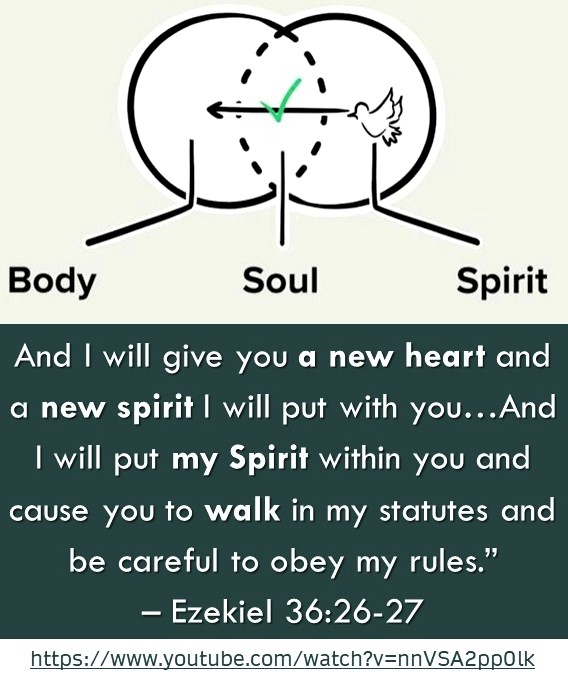
The Christian view of personhood flips the world’s view of personhood on its head. A human being’s identity is not gained by what happens around him or to him so much as what is happening within him. The spirit is our deepest identity yet vitally united with soul and body as our life is expressed from the inside out. The spirit communicates with God through our soul (unique personality, emotions and thinking) and with the people and world around us through our bodies.
It is tempting to think of poverty of spirit as lacking energy, having a nominal faith, or feeling disheartened. It might, but only if we are referring to a non-Christian who is spiritually dead toward God. In reference to disciples who follow Christ (the ones he was addressing in Matthew 5), we should be thinking of the condition or state or our heart in his presence.
If Jesus does have first place in our hearts, as he does in his Kingdom of Heaven, then we are poor in spirit.
To say that poverty of spirit refers to an emotional low or lack or true faith that borrows on the ideas of the world that don’t acknowledge that there’s something far more important to God than our emotional response to life’s circumstances. In fact, it’s when we are most discouraged, stopped in our tracks emotionally, that we need to be poor in spirit and humbly come before God seeking HIS sufficiency and HIS overcoming power. Michael Card sings, “Come lift up your sorrows and offer your pain; come make a sacrifice of all your shame. There in your wilderness He’s waiting for you to worship Him with your wounds — for He’s wounded too.”[6]
Why is it possible for a Christian to trust in God, have hope, and even experience a deep, joyful peace in the midst of difficult times?
It’s because he is “poor in spirit”! He is putting Christ’s interests and way of living first in those circumstances. His spirit is alive to God and his deepest identity is “in Christ.”
And that what Jesus sees in his disciples when he blesses them. He sees …
- He sees their heart of hearts, their spirits, emptied of self-pride.
- He sees that they have put HIM, the Christ, ahead of all else.
- He sees them sitting at His feet in expectancy, trusting Him to give them all they need.

…AND BLESSES THEM!!!
That was my mother preparing for Sunday dinner, and it might be any of us.
Jesus looks at us also with joyous affection when we recognize that we are nothing without him.[7] He looks on us with the power of blessing filled with the power of God—the Kingdom of God!It’s as if he is saying to any who are poor in spirit here today, “I am now the answer to your empty heart. You will now have all the life your heart can possibly hold!”
WOW!! This is amazing: The Kingdom of God in exchange for homeless beggary!
No wonder the disciple who puts Jesus first can be said to be heart-happy and heart-fulfilled! Amazing grace! — God’s Kingdom filling and overflowing the heart!!
Can we not see generosity as big as the universe in the heart of our Savior here? In exchange for first place in our hearts he gives us far more than we think we have now — far more than we could ever give away — far more than, as Ephesians 3:20 says, “far more than we could ever ask or think”?
So, is it possible for a rich person living above the poverty level to have poverty of spirit? YES, if the rich man gives up whatever he calls his own into the hands of the Master (Mark 10:17-27).
The King of Glory is poor in spirit!
Jesus Christ is poor in spirit![8] The Scripture states plainly that for our sakes he became poor, that by his poverty, he could make us rich! (2 Corinthians 8:9) All we need do is follow him.
We cannot make ourselves poor in spirit, but we can follow him — with all our heart. In so doing, by following Him we BECOME poor in spirit.
Jesus said, “Come to me, all you who are weary and burdened, and I will give you rest. 29 Take my yoke upon you and learn from me, for I am gentle and humble in heart, and you will find rest for your souls. 30 For my yoke is easy and my burden is light.” (Matthew 11:18-30)
So, let’s come before our Lord today — not to try and justify our existence — not to make sure we’ve got all the bases covered — but to humble ourselves that HE alone might be exalted in our lives and we will inherit the Kingdom that Jesus himself has redeemed through his own poverty of spirit.
Peter began to say to him, “See, we have left everything and followed you.” 29 Jesus said, “Truly, I say to you, there is NO ONE who has left house or brothers or sisters or mother or father or children or lands, for my sake and for the gospel, 30 who will not receive a hundredfold now in this time, houses and brothers and sisters and mothers and children and lands, with persecutions, and in the age to come eternal life.
Mark 10:28-30 ESV
A Sample Prayer of the Poor in Spirit

Jesus, I trust You. I don’t need to understand everything that’s happening— I just need to be still and know You. You are enough for me, and so I will place my hope, trust, joy, and future in You. I believe in You. Lord, I am no longer my own, but yours. Put me to what you will, rank me with whom you will. Let me be exalted for you or brought low by you. Let me have all things, let me have nothing, I freely and heartily yield all things to your pleasure and disposal. For the sake of your kingdom. Amen! (inspired by John Wesley’s Covenant Prayer)
[1] Matthew 22:2-14, Luke 14:16-24, Revelation 19:6-10, cf. Isaiah 55
[2] It’s important to note that the word used here refers to a state of being, not standard of living. The Greek word for “poor” in this case is ptochos (toe-KAS), meaning one who is living in a state of begging dependence or bankruptcy. 1 Corinthians 13:3 NIV, “If I give all I possess to the poor and give over my body to hardship that I may boast, but do not have love, I gain nothing.”
[3] Luke 18:9-14
[4] Mark 12:41-44
[5] Luke 15:11-32
[6] Come Lift Up Your Sorrows – Michael Card. Verse 1: If you are wounded, / And if you’re alone, / If you are angry, / If your heart is cold as stone, / If you have fallen / And if you are weak, / Then come find the worth of God / That only the suffering seek. Refrain: Come lift up your sorrows / And offer your pain; / Come make a sacrifice / Of all your shame; / There in your wilderness / He’s waiting for you / To worship Him with your wounds, / For He’s wounded too. Verse 2: He has not stuttered, / And He has not lied / When He said, “Come unto Me, / You’re not disqualified” / When you’re heavy laden, / You may want to depart, / But those who know sorrow; / They’re closest to His heart. Verse 3: In this most holy place; / He’s made a sacred space / For those who will enter in / And trust to cry out to Him; / And you’ll find no curtain there, / No reason left for fear; / There’s perfect freedom here / To weep every unwept tear
[7] John 15:1-5
[8] Jesus Christ is poor in spirit…
- In Jesus’ conversation with Father God in taking up our nature and coming to earth, he said, “Look, I have come to do your will, O God—as is written about me in the Scriptures.” (Hebrews 10:5-10).
- Jesus had no place to lay his head (“to call his own”) (Luke 9:57-62).
- “My food,” said Jesus, “is to do the will of him who sent me and to finish his work.” (John 4:34)
- Jesus knelt at the feet of his disciples and washed their feet. (John 13:1-17)
- He said, “Not my will be done, but Thine.” (Luke 22:39-46)
- Jesus was focused on us, not himself when He took up the flesh and went to the cross (Philippians 2:5-8).
- Scandalon – Michael Card
Additional Resources
Video Message of this Teaching
“The Kingdom Feast of Jesus (Matthew 5:3)“
The Beatitutes describe the “good life” of the Kingdom of Heaven
The Beatitutes describe the “good life” of the Kingdom of Heaven. In the Kingdom of Heaven, we live by grace (gifting, blessing). We live righteously as Jesus Himself lives. We are under His lordship and have power to live there only by His living presence in our hearts.
The “happiness” that results is that of the heart. It is not dependent on outside circumstance, but rests solely on the fact of His presence in our lives.
The 8 Beatitudes are a preamble to the rest of the Sermon on the Mount. They begin and end with the gift of the Kingdom of Heaven. The first part emphasizes that the starting point and power to live in Christ’s Kingdom living is grace. As the Beatitudes conclude, they have moved us outward to living the righteous (ethical, faithful, holy) Kingdom life of Christ openly in our world. That is then more fully explained by Christ in the rest of the Sermon on the Mount.
=======================
The Meaninng and Message of the Beatitudes, Ranko Stefanovic
Two things may be observed in the Beatitudes. First, Jesus radically changed the conventional concept of happiness. Those who experience this happiness are not blessed according to the conventional meaning that may include good fortune or a life free of hardships. These are ephemeral and fickle. They are blessed not because of hardships in life, but rather in spite of hardships in life. True happiness is “not attached to wealth, to having enough, to a good reputation, power, possession of the goods of this world.”4 The blessed might possess nothing, be hungry, humble, afflicted, humiliated, endure hardships, and be persecuted; the circumstances of life may turn against them; yet life cannot take that happiness from them because life has not given it to them. In such a way, the Beatitudes in the Sermon on the Mount depict a “reversal of all human values.”5
This true happiness is not to be understood as a mental or emotional state or in relation to one’s feelings, but rather as the result of a divine act in human lives. God is the true source of happiness. Disciples are in a state of happiness when they are aware of God’s special blessings regardless of whether they are experiencing good fortune or hardships in life. In such a way, “what constitutes life as it was intended to be lived stands in stark contrast to conventional wisdom”6 in which “happiness is something which is dependent on the chances and the changes of life, something which life may give and which life may also destroy.”7 In Jesus’ teaching, happiness “describes that joy which has its secret within itself, that joy which is serene and untouchable, and self-contained, that joy which is completely independent of all the chances and the changes of life.”8
The second thing that may be observed is that, in contrast to the Old Testament and the conventional concept in which happiness refers to one’s present well-being, the Beatitudes go beyond the present situation to the future, in the fashion of Jewish apocalyptic literature. While someone may be blessed and, as a result, happy now, the visible conferral of such blessings will not be experienced ultimately until the future realization of God’s kingdom on the earth. Thus, in the Beatitudes, the present and the future are related.
This futuristic character of the Beatitudes, however, is not to be understood, as U. Becker rightly observes, “in the sense of consolation and subsequent recompense. The promised future always involves a radical alteration of the present.”9 The disciples are not happy because they are free of hardship in life, but rather because they are citizens of the kingdom by following Jesus as they go through hardship in life. Their lives have meaning in light of the future realization of the kingdom. It is the future that provides strength for the disciples in the present.
The inner happiness spoken of in the Beatitudes is God’s gift of blessing granted to those who choose to be disciples. This blessing is a result of the realization of a person’s spiritual poverty (Matt. 5:3) and an acknowledgment of one’s total dependence on God (vs. 5). The disciple is blessed because of the special relationship with God today as well as in the light of the future reward. Such blessedness and happiness cannot be taken away by adverse circumstances in life.
=======================
In his book, Crucifying Morality (Shepherd Press, April 1, 2013), R.W. Glenn walks through Matthew 5:1-12, emphasizing that in the Beatitudes, Jesus doesn’t prescribe what ought to be in order to experience God s grace, but describes what is true of people who understand the grace of God. He writes,
It is no accident that the Beatitudes contain no imperatives whatsoever. Because we are wired for performance and have an insatiable hunger to turn Christianity into a system of dos and don’ts to earn a spot at the table of grace, we feel almost irresistibly inclined to turn them into commandments. Instead, they are the qualities that begin to characterize sinners who encounter God’s grace in the gospel.” We need to be careful not to read the Beatitudes as a series of commandments because when we do that we empty them of their true power.
After all, “the Beatitudes are a profile of the Christian. They are a description of people who would never dream of turning the characteristics God has given them by grace into a list of moral commands because they know that Jesus has crucified even their best attempts at self-centered, self-propelled morality on the cross.” The Beatitudes are not a list of dos and don’ts that get you into God’s kingdom, but a list of declarations of what a child of the kingdom looks like. Where too many people reduce Christianity into a system of achievement in which you do certain things in order to gain life, the Beatitudes instead show Jesus saying, “I have done this, so you can live.”
Christianity is not moralism. Christianity is not religiosity. Jesus was crucified because we are committed to saving ourselves by our religious stamina and moral efforts. The Beatitudes in their simplicity are not commands to be followed, principles to live by, or attitudes to adopt. They profile people who have crucified their own morality in Jesus death, resurrection, and rule.
 breathingbygraceblog